

How We Use AI to Run Shopify Stores After Launch
 Ryan Kodzik
Getting a brand onto Shopify is the starting line, not the finish. The store that goes live on day one is a foundation. What you build on it and how you operate it determines whether it grows.
💡 Recommended Reading: How We Use AI Across the Shopify Migration Process
AI has become a significant part of how we manage that ongoing work. Not as a replacement for strategy or human judgment, but as a set of tools that help us monitor more, act faster, and keep stores competitive in an environment that’s shifting quickly.
Here’s what that looks like in practice.
Agentic Commerce and GEO: Getting Found by AI Shopping Agents
Search hasn’t been just Google for a while, but 2025 accelerated the change. Shoppers are now discovering and buying products through ChatGPT, Google’s AI Mode, Microsoft Copilot, and Perplexity. Shopify co-developed the Universal Commerce Protocol (UCP) with Google as an open standard for AI-driven transactions, and AI-driven orders increased 15-fold in 2025.
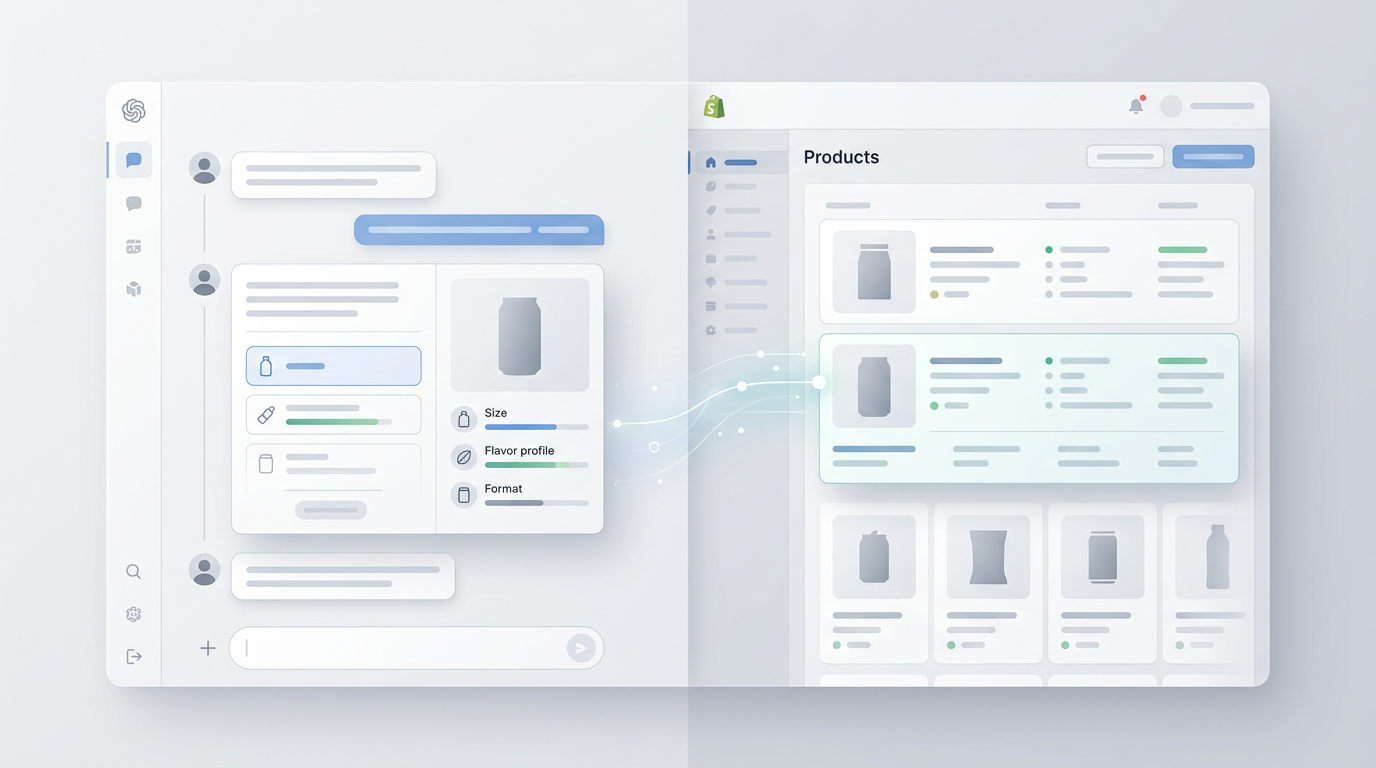
Agentic commerce is the practical result: AI agents that find, evaluate, and complete purchases on behalf of shoppers. For brands, showing up in those channels requires more than good SEO. It requires structured data, clear product information, and technical hygiene that AI crawlers can actually work with. That’s what Generative Engine Optimization (GEO) addresses.
We’ve been installing and auditing GEO tooling in client stores for the past several months. The brands that get this right now will show up in AI-mediated shopping experiences that are becoming the primary discovery channel for a growing segment of buyers.
💡 Recommended Reading: Our Agentic Commerce Work

AI for Customer Support: Faster Resolution, Fewer Tickets
Customer support is one of the highest-leverage places to apply AI in a Shopify store. The volume is predictable, the questions are often repetitive, and the cost of slow or inconsistent responses is real, especially for CPG and food and beverage brands where order issues directly affect repeat purchase behavior.
We’re currently implementing AI-assisted support for The Vault using Klaviyo Customer Hub. The goal is to handle common inquiries, order status, shipping questions, returns, with AI responses that feel consistent and on-brand, while escalating anything that needs human judgment.
The implementation isn’t just about speed. It’s about making sure every customer interaction reflects the brand accurately, regardless of volume or timing.
AI Analytics: Understanding Where Your Traffic Is Coming From
If you’re not tracking AI-referred traffic, you don’t have a complete picture of your store’s performance. That’s increasingly true in 2026, as more of the buyer journey runs through AI interfaces before a shopper ever hits your site.
We’ve built analytics monitoring into our ongoing store management work to track AI traffic sources, measure what those visitors do on-site, and assess whether GEO efforts are working. This is an area where the tooling is still maturing. Most standard analytics setups don’t surface AI traffic clearly without some configuration work.
Understanding this data early creates an advantage. Brands that know how AI-referred traffic behaves differently from organic or paid traffic can make better decisions about content, product page structure, and where to invest.
Product Recommendations: Building a Stack That Actually Works
Product recommendations are one of the most direct ways AI improves store revenue, and most Shopify stores are underusing what’s already available to them.
We work with Shopify’s native recommendations engine as a baseline, and layer in tools like Rebuy and
Klaviyo‘s recommendation features depending on the brand’s needs and tech stack. Klaviyo, specifically, can power recommendations through email and SMS grounded in actual purchase behavior. The suggestions a customer sees in a post-purchase flow are relevant to what they actually bought, not just what’s trending site-wide.
The right stack varies by brand. A CPG brand with a handful of high-velocity SKUs needs a different approach than a specialty food brand with a deep catalog and complex purchase patterns. The common thread is that recommendations should be data-driven and tested, not set and forgotten.

Shopify Sidekick: Inside the Day-to-Day
One tool worth naming directly: Shopify Sidekick. Our team uses it for brainstorming custom reports and working through flow logic before handing off to developers or implementation specialists for execution.
Sidekick doesn’t replace analytical thinking, and we don’t treat it as a strategy tool. But it’s a fast way to explore what Shopify’s native capabilities can do before deciding whether something needs custom development. For brands wondering what’s possible within Shopify before they commission a build, it’s a useful starting point.
Staying Ahead Is an Active Job
The Shopify ecosystem is moving faster in 2026 than it has in years. New agentic commerce capabilities, evolving AI search behavior, improving native tooling. The stores that stay ahead are the ones where someone is actively paying attention to what’s changing and adjusting accordingly.
That’s a significant part of what an ongoing agency relationship provides. Not just execution, but the judgment to know which changes matter and when to move on them.
If you want to talk through where your store stands on any of this, reach out
Frequently Asked Questions
How do you use AI to run a Shopify store after launch?
We apply AI across four areas: getting found by AI shopping agents through Generative Engine Optimization, handling repetitive customer support inquiries, tracking AI-referred traffic in analytics, and powering product recommendations. The goal is to monitor more, act faster, and keep the store competitive. Human strategy and judgment still drive the decisions.
What is agentic commerce and why does it matter for Shopify stores?
Agentic commerce is AI agents that find, evaluate, and complete purchases on behalf of shoppers through tools like ChatGPT, Google’s AI Mode, and Perplexity. AI-driven orders increased 15-fold in 2025, and Shopify co-developed the Universal Commerce Protocol with Google as an open standard for these transactions. Showing up requires structured data, clear product information, and technical hygiene that AI crawlers can read.
How can AI improve customer support for an ecommerce store?
Support volume is predictable and many questions repeat, which makes it one of the best places to apply AI. We implement AI-assisted support that handles common inquiries like order status, shipping, and returns with on-brand responses, then escalates anything needing human judgment. This is especially valuable for CPG and food and beverage brands where order issues affect repeat purchase.
How do you track traffic coming from AI search?
Most standard analytics setups do not surface AI-referred traffic clearly without configuration work. We build monitoring into ongoing store management to identify AI traffic sources, measure what those visitors do on-site, and assess whether GEO efforts are working. Brands that understand this data early can make better calls on content, product page structure, and where to invest.
What AI tools improve Shopify product recommendations?
We start with Shopify’s native recommendations engine as a baseline, then layer in tools like Rebuy and Klaviyo’s recommendation features depending on the brand’s stack. Klaviyo can power recommendations through email and SMS grounded in real purchase behavior, so a post-purchase flow suggests items relevant to what the customer actually bought. The right mix should be data-driven and tested, not set and forgotten.
Why do Shopify stores need ongoing management after launch?
The store that goes live is a foundation, and what you build on it determines whether it grows. The Shopify ecosystem is moving fast in 2026 with new agentic commerce capabilities, shifting AI search behavior, and improving native tooling. Staying ahead requires someone actively watching what changes and the judgment to know which changes matter and when to act.
Ready to put this into practice?
We build and grow Shopify stores for DTC brands, from store design and development to Klaviyo and full-scale CRO programs. If you want to talk through what this looks like for your store, book a call. No pitch, just a conversation.
Book a discovery callRelated Articles