

Your Shopify Store Is Now Live on ChatGPT. Did You Set It Up, or Did It Just Happen?
 Ryan Kodzik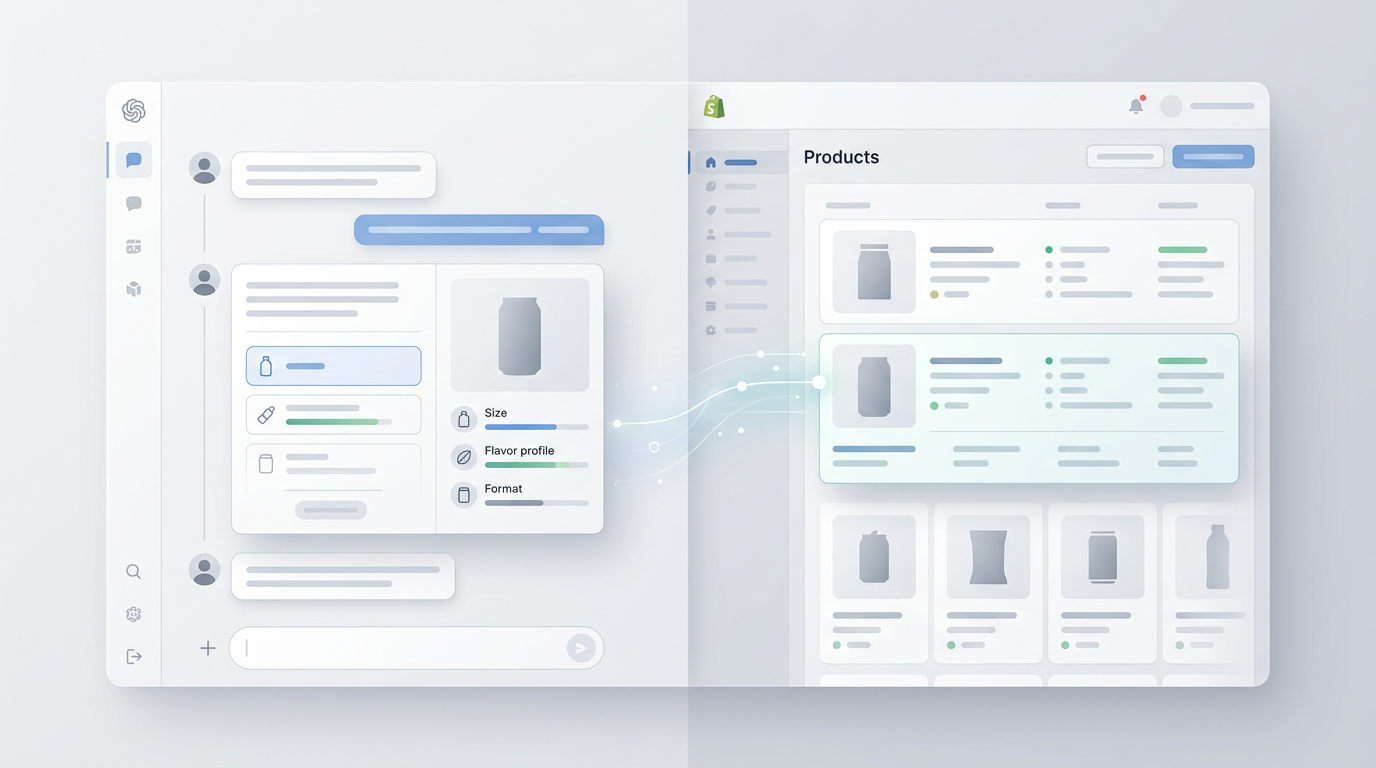
On March 24, 2026, Shopify flipped a switch. Every eligible Shopify merchant’s products became discoverable inside ChatGPT — automatically, with no app to install and no action required. If you got an email from Shopify about Agentic Storefronts and moved on, your store is already in the system. The question is whether it’s working for you.
What Shopify Did — and Why It Matters
Shopify’s Agentic Storefronts connect your product catalog to AI platforms — ChatGPT, Google AI Mode, Microsoft Copilot, and Gemini — through a single feed managed from your admin. The feature launched by default for all eligible U.S. stores. That means 5.6 million Shopify merchants are now listed inside ChatGPT without lifting a finger.
That’s the reach side. Here’s the revenue side: AI-driven traffic to Shopify stores grew 7x between January 2025 and the launch date, and AI-attributed orders grew 11x over the same period. This channel was already moving real volume before it became permanent infrastructure.
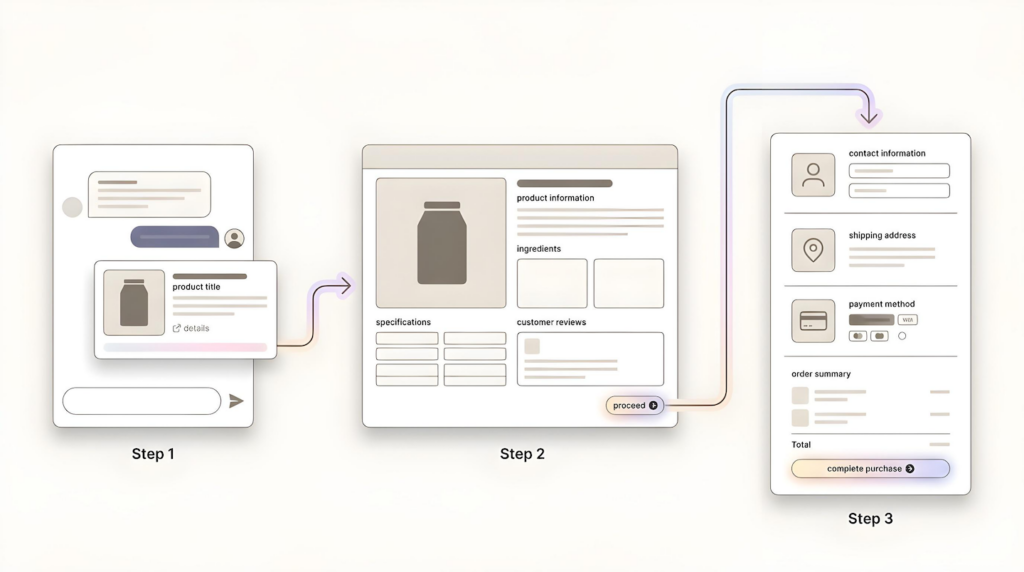
When someone asks ChatGPT “what’s the best protein powder for endurance athletes under $50,” your products can show up in that response. They click through to your storefront — your checkout, your post-purchase flows, your brand — and complete the purchase there. You retain the customer relationship. You own the data.
The distribution is real. Whether the execution is ready is a different question.
Showing Up Isn’t the Same as Showing Up Well
Default-on means your products are in the system. It doesn’t mean they’re being recommended.
Shopify Catalog — the data layer that feeds your products to AI platforms — surfaces items based on how well your product data matches what buyers are asking. An AI agent evaluating “best lightweight jacket for hiking” isn’t browsing your storefront the way a human would. It’s parsing your titles, descriptions, attributes, and reviews to decide if your product is a confident match.
Vague product titles don’t get recommended. Incomplete descriptions get skipped. Missing variant data creates gaps the agent can’t fill. The brands showing up consistently in AI results aren’t there because they got lucky — they’ve built product data that’s specific, complete, and structured in a way the catalog can actually use.
There’s also the post-click side. When ChatGPT sends a buyer to your store, they land on your product page and enter your checkout. If that experience isn’t tight — slow load, weak PDP copy, friction at checkout — you’ve paid for the discovery and lost the sale. AI-referred traffic converts well when it gets to a strong store. When it doesn’t, the channel looks like it’s underperforming when the real problem is what happens after the click.
💡 Recommended Reading: The CPG Brand’s Problem with Agentic Commerce Isn’t Discovery — It’s Data
What’s Actually Live Right Now
A few details worth knowing as you assess where your store stands:
ChatGPT
acts as a discovery and referral channel. Buyers browse in the chat, then complete their purchase on your storefront via an in-app browser or new tab. There’s no in-chat checkout — OpenAI walked back that model in March 2026 after limited adoption. ChatGPT reaches 880 million monthly active users.
Google AI Mode and Microsoft Copilot
support direct checkout through Shopify’s built-in payment infrastructure — buyers can complete purchases without leaving the conversation. Both are in early access and not yet live for all stores.
Fees
Shopify charges no additional transaction fees for AI channel sales. OpenAI charges a 4% fee on ChatGPT sales. Google AI Mode and Microsoft Copilot currently charge nothing additional.
You can manage which channels are active under Settings → Sales Channels → Agentic Storefronts in your admin.
The Gap Between Listed and Competitive
Most coverage of this launch has focused on the mechanics of setup. What’s getting less attention is what separates a store that’s listed from one that’s actually competitive on these channels.
The brands seeing results from agentic commerce have a few things in common: product data that’s accurate, specific, and complete; PDPs that convert the traffic the channel sends; and post-purchase infrastructure — email, SMS, review flows — that captures the value of a first order. Those aren’t agentic commerce features. They’re the foundations that make any new channel work.
If your store wasn’t optimized before March 24, being listed in ChatGPT doesn’t fix that. It just gives you a new way to surface the gaps.
We Can Help
We work with DTC brands on exactly this — the conversion and retention infrastructure that determines whether a new channel pays off. If you’re unsure how your store is positioned for agentic commerce, we offer an Agentic Readiness audit that looks at your catalog data, your product pages, and your post-click experience, and tells you specifically what’s working and what needs attention.
Get in touch to learn more.
Ready to put this into practice?
We build and grow Shopify stores for DTC brands, from store design and development to Klaviyo and full-scale CRO programs. If you want to talk through what this looks like for your store, book a call. No pitch, just a conversation.
Book a discovery callRelated Articles